When it comes to cutting carbon, Hotel Marcel blurs the line between the past and the future. Built in 1968, the landmark architectural property is now on the fast track to becoming the first net-zero hotel in the U.S.
Located at the intersection of I-95 and I-91 in New Haven, Connecticut, Hotel Marcel is arguably the most prominent work of modern architecture in the northeast U.S. But this LEED Platinum-certified property also shines in sustainability. The all-electric hotel generates enough renewable energy to sustain its operations and is expected to become the first net-zero hotel in the U.S. in 2025.
In adaptive reuse of the historically significant building, Bruce Becker of Becker + Becker set his sights high. “It was our goal to create a model for sustainability in the hospitality industry,” he says. “We knew we’d need to design something with minimum or neutral carbon impact, and we knew that rebuilding would be more efficient than building a new structure.”
Sustainability doesn’t cost: It pays
Designed by noted architects Marcel Breuer and Robert F. Gatje, Hotel Marcel is listed on both the state and national registers of historic places. Redevelopment came with guidelines intended to protect the building’s historic integrity. Those constraints presented unique challenges, but left ample room for innovation in sustainability.
Electricity generated by more than 1,000 photovoltaic panels on carports and an expansive roof enable the hotel to power its own microgrid. Power-over-Ethernet lighting and one megawatt hour of battery storage keep all hotel systems running smoothly.
Put another way, sustainability doesn’t cost: It pays. “It’s quite cost-effective to generate energy onsite,” Becker notes. “In designing this system, we were just trying to be responsible. But as it turns out, that’s the most economical approach. Our energy bills are about a quarter of what they’d be at a typical hotel.”
Energy savings
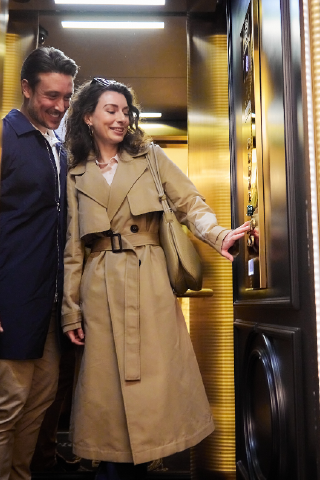
Energy-efficient KONE MonoSpace 500 DX elevators, designed to use half the energy of hydraulic elevators, are a key component of the property’s commitment to sustainability. The KONE solution also eliminates the need for an elevator machine room, effectively returning the entire ninth floor to the owner, who has converted it into a premium-level event space.
Importantly, KONE regenerative drive elevators actually return energy to the building. “That was a big selling point for us,” Becker says. “Other than solar panels, the elevators are the only component of the building that actively generates electricity. When you’re trying to get to net zero, any component that makes its own electricity is valuable. It’s a very clever solution.”
And one that’s driving considerable interest within the hospitality sector. “People comment on that being one of the most energy-efficient features of the property,” Becker adds. “Why would you want to waste energy when you can put it back in the building?”
Leading the way to a net zero future
In supporting Hotel Marcel’s sustainability goals, this unique KONE solution also supports the city of New Haven, which seeks to cut community-wide greenhouse gas emissions by the end of 2030. And that is a direct reflection of KONE’s broader role as an industry leader in sustainability.
KONE helps customers make reductions in carbon emissions, assists them in decarbonizing and provides clear information on the environmental impact of KONE elevators, including materials used, weight, biogenic carbon and annual energy consumption.
“We need to keep making these types of transformational shifts in sustainability to lead the way to a net zero future,” says Corey Ward, KONE Senior Vice President, Safety, Quality and Environment. “For me personally, it feels very powerful that KONE plays a major role in cutting carbon. We support smart urbanization through an innovative offering and quality, functional and sustainable materials.”