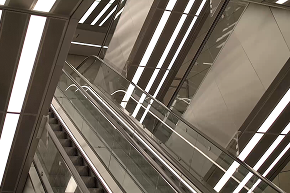
Escalators are essential components of modern infrastructure that help provide smooth and convenient movement in high-traffic spaces like malls, airports and transit stations. Yet, while they are designed for efficiency, there are simple upgrades that can be made to help improve safety.
Do you know some of the critical signs that you need to look for to enhance your escalators’ safety? Some may surprise you.
1. Escalator step treads are damaged from objects or debris
When passengers drop objects – such as loose change – or even kick small rocks onto an escalator, these objects can become wedged between the moving escalator steps and the stationary comb segments, grinding down the step tread and making it razor sharp. This could cause property damage and personal injury as well.
The fix: Clear the unit of passengers, stop the unit and barricade both the entrance and exit before attempting to clear the object with a broom. Never use your fingers, as a pinch or cut could occur. If the object cannot be cleared, contact your maintenance provider immediately. If your escalator steps have been damaged, request your maintenance provider provide a quote to have the escalator steps replaced.
2. Passengers use the escalator deck as a personal slide
If escalator units are placed side by side and share a common deck, children or others may attempt to slide down the units, putting them at risk of personal injury.
The fix: Contact your maintenance provider and request a quote to install anti-slide knobs to the common shared decking between the units.
3. Escalator comb segments are incognito
If escalator comb segments are the same or a similar color as the steps and walk-on plates, there is no visual point of reference for passengers to see where the moving steps end and the stationary walk-on plates begin. This is why code has been updated for newly installed units that requires the use of step demarcation and addresses this potential tripping hazard.
The fix: Contact your maintenance provider and request a quote to upgrade your comb segments with yellow or black comb segments instead, which are easy for all passengers to see.
Note: Broken comb teeth are also a potential safety hazard. When comb teeth break off the comb plate, it creates a gap between the comb and the moving escalator step where objects or people could become entrapped.
Notify your maintenance provider immediately and ask that the damaged comb segments be replaced.
By taking proactive steps to address these common escalator hazards, you can significantly enhance passenger safety and help prevent avoidable accidents. Regular maintenance and thoughtful upgrades help escalator passengers safely and reliably reach their destination. If you spot any of these signs, be sure to contact KONE or your escalator maintenance provider today.